The news poked at my old anxiety about being an organ donor. But in the hospital, I saw the tears hospital staff shed for deceased organ donors during honor walks. I saw the joy when lives were saved.


This mom turned the loss of her son into a life-changing gift
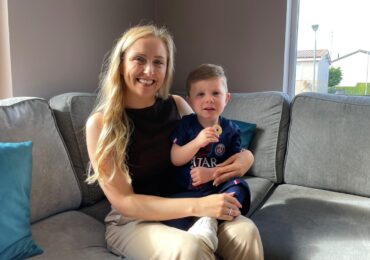
In Memphis, Tennesee, a grieving mom who donated her late son’s organs meets the woman saved by his kidney, sharing an emotional moment of connection.
As someone who is alive today because of an organ donation, I was alarmed by the news that Donate Life America, a nonprofit that oversees a national registry of organ donors, saw a 700% increase in donor registration withdrawals since July.
That startling drop in donors followed reporting by The New York Times offering horrifying details of how in extremely rare instances, teams rushed to secure organs from patients who still showed a flicker of life. A federal investigation found that at least 28 patients might not have been dead when organ procurement began. Thankfully, the surgeries weren’t completed.
I’m not here to fault The Times’ reporting. But I am here to say that the reaction to vacate the registry is the wrong move. (Full disclosure: I work at Wirecutter, a product review site run by The New York Times Co.)
The reporting spotlights the differences between brain death and “donation after circulatory death.” In the latter case, surgeons stop life support with the family’s consent and recover the organs after the heart permanently stops beating. Typically, the patients noted in the federal investigation and The Times reporting qualified for circulatory death.
Yet donation after circulatory death isn’t the problem. In fact, the first human organ transplants included circulatory death donors. Rather, the cases described were rife with worrisome consent practices, subpar neurologic assessments and poor communication among teams. Still, some people have abandoned their desires to donate their organs after they die. It’s a personal choice and I respect it.
More than 103,000 people are on the national transplant waiting list, according to the Organ Procurement and Transplantation Network (OPTN). Every eight minutes, someone joins the registry. And an estimated 13 people die every day waiting for an organ transplant.
I always wanted to donate my organs. Then an organ donor saved my life.
In 2024, more than 24,000 people ‒ including 9,700 brain death and 7,200 circulatory death donors ‒ saved lives with the ultimate gift, says OPTN. If it weren’t for these generous souls and their families, many of the 48,000 transplant recipients wouldn’t be here.
That could have been me.
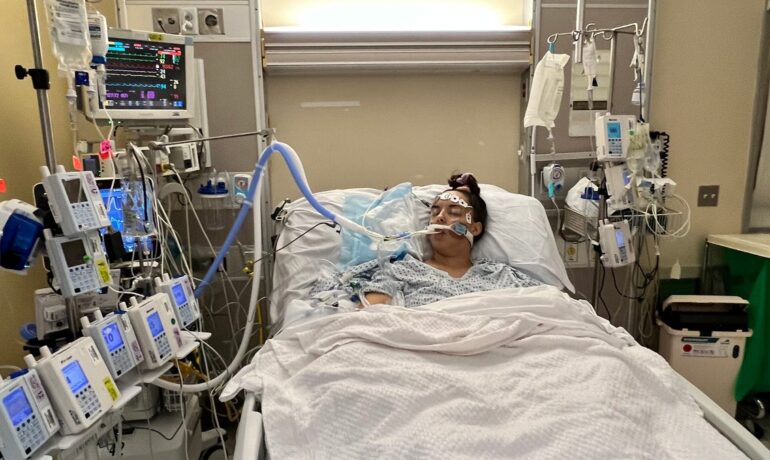
In 2024, I spent nearly 10 months in an intensive care unit for acute respiratory distress syndrome, a life-threatening lung injury that prevents the lungs from filling up with oxygen. The disease destroyed my lungs and sent me into heart failure. As expected, it led to damage in my brain, kidneys and stomach. (And just recently, I learned a kidney transplant may be in my future.)
Like countless others, the news stories poked at my former anxiety about being a registered organ donor. I always knew I wanted to donate my organs. Yet, I feared medical staff would focus on procurement to help another, rather than try to save my life.
But while hospitalized, I saw the compassion and tears that hospital staff shed for deceased organ donors during honor walks. I felt the joy radiate from them when lives were saved thanks to the donors’ sacrifices. I signed the consent forms understanding my new, perfect set of pinkish lungs may be donated by someone who suffered either circulatory death or brain death. I witnessed firsthand the care and tenacity of the doctors, nurses and therapists who worked tirelessly to save me.
And I’m confident emergency medical staff did everything humanly possible to revive the woman from Florida whose lungs now breathe for me. (Fortunately for me, she was not one of the 950 people who recently removed themselves from Florida’s registry.)
Patients can wait years for a lifesaving donation
I know that in no way do reputable programs rush to throw any viable organ into the next terminally ill patient. Circulatory death donors are treated with dignity and respect, and only become donors after families choose a natural death.
While there are more than 173 million Americans on donor lists, only 3 in 1,000 people are eligible candidates when they die. If everyone on the registry died tomorrow, that means just 519,000 people would become candidates.
The seemingly serendipitous moment is the coalescence of case severity, blood type, body size, organ status, timing, tissue type and a million other things. Wait times for patients can be a week for a living liver donor, to a median of over 720 days for a high-priority heart transplant.
I waited 206 days.
Yes, attempting to prematurely remove organs, even for seemingly noble reasons, is inexcusable. What happened to those 28 patients is a beyond-the-pale anomaly.
Legislation like the Uniform Determination of Death Act and regulatory bodies like the Health Resources and Services Administration work to keep the process safe. Share your reservations and end-of-life care preferences with the people you trust. Seek out transplant recipients and living donors by contacting your local transplant hospital to learn what being an organ donor truly means.
Rather than let fear halt generosity, join or keep your name on the donor registry list. A larger donor registry gives everyone on the waiting list a better chance at a future. And what we truly should be afraid of is a world without altruism and compassion – not one where we save human lives through organ donation.
Kaitlyn Wells is a double lung transplant recipient who has written about the disparities of organ and bone marrow donation within communities of color. She has a memoir in progress about adverse drug reactions and organ transplants. She works at Wirecutter, a product review site run by The New York Times Co.